
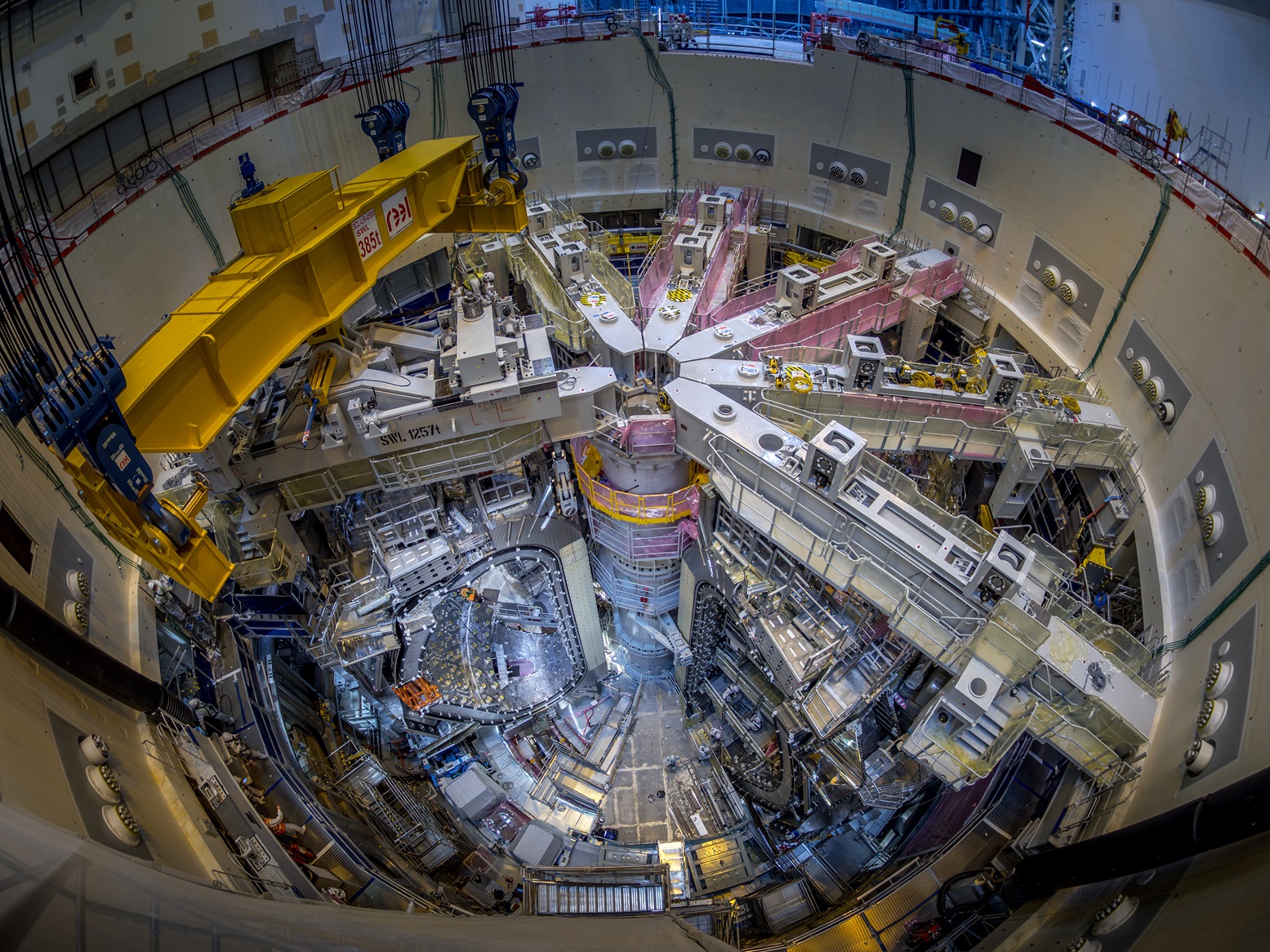
What if the process that powers the stars could one day supply electricity on Earth? It is a compelling idea, but also one that demands extraordinary scientific precision. The problem is not simply to create a fusion reaction. Scientists have done that. The challenge is to sustain useful reactions, control an exceptionally hot plasma, manage the energy produced and ultimately make the entire system practical.
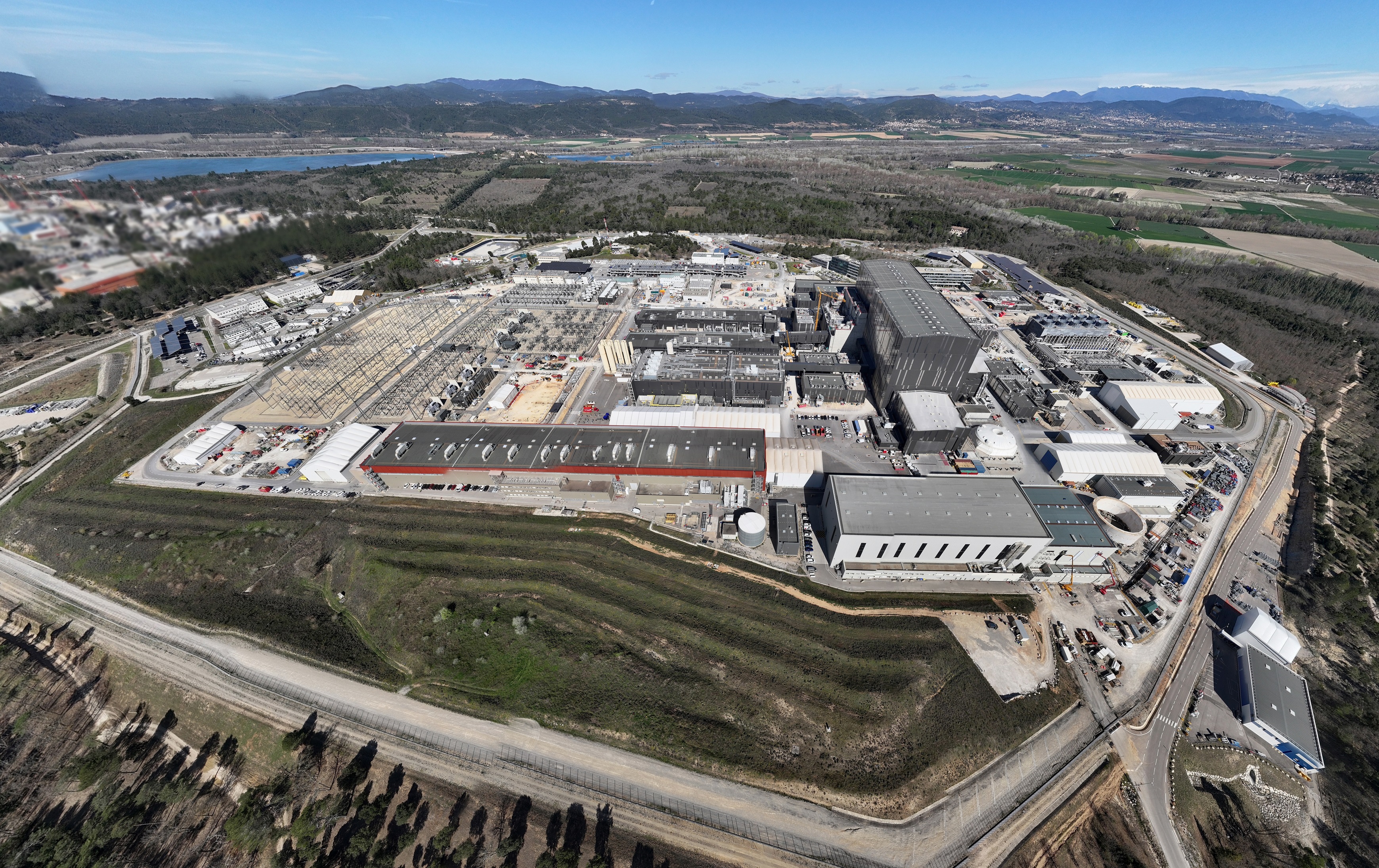
At Saint-Paul-lez-Durance, near Cadarache in southern France, the ITER project is attempting to address crucial parts of that challenge. Its name comes from the Latin word for the way, reflecting a long journey rather than an immediate technological solution.
01 / An international idea born during the Cold War
ITER's origins date to 1985, when Soviet leader Mikhail Gorbachev raised the idea of international cooperation in fusion research with US President Ronald Reagan. The early programme brought together Europe, Japan, the Soviet Union and the United States. China, South Korea and India later joined; the ITER Agreement was signed in 2006.
Today the seven ITER Members are the European Union, China, India, Japan, South Korea, Russia and the United States. Switzerland has also renewed its participation through its association with European programmes. Europe is responsible for 45.6% of the construction contributions; the other six Members account for approximately 9.1% each. The published shares are rounded, so they do not add up to exactly 100%.
Construction contributions by ITER Member

Approximately 90% of the Members' contributions are delivered in kind: buildings, specialised equipment and components rather than direct cash payments. This arrangement turns the project into a vast international engineering network. Components manufactured in different countries must meet demanding specifications and eventually fit together inside one machine.
02 / Fusion and fission: two different nuclear processes
The word nuclear often causes confusion because it covers different physical processes. The energy in both cases comes from changes in nuclear binding energy, but the reactions move in opposite directions.
Fission: splitting a heavy nucleus
In conventional nuclear power stations, a neutron can cause a uranium-235 nucleus to split. The process releases heat, radiation and additional neutrons, which may trigger further fission reactions. The chain reaction is controlled by the reactor's design and safety systems. Heat is transferred to a turbine system that drives an electrical generator.
Fusion: combining light nuclei
ITER will study a reaction between two hydrogen isotopes: deuterium, containing one proton and one neutron, and tritium, containing one proton and two neutrons. When they fuse, the products are helium-4, a neutron and 17.6 MeV of energy:
The Sun also shines because of nuclear fusion, although its dominant fusion pathway is not the same deuterium-tritium reaction selected for ITER. On Earth, extremely high plasma temperatures are needed to obtain useful reaction rates. ITER aims to reach approximately 150 million degrees Celsius.
03 / France's EPR: nuclear fission in practice
France provides a particularly useful comparison. While ITER is being assembled in Provence, the Flamanville 3 EPR in Normandy is a pressurised-water fission reactor built to generate electricity.
Flamanville 3 first connected to the French electricity grid in December 2024. EDF reported that the reactor reached 100% of nominal nuclear thermal power for the first time on 14 December 2025, with 1,669 MW of gross electrical output.
 |
Flamanville Nuclear Power Plant, France. Reactor 3 (EPR) in the foreground. Photo: JKremona / Wikimedia Commons — CC BY-SA 4.0. Official source and photographs ↗ |
| Question | EPR / Fission | ITER / Fusion |
|---|---|---|
| Physical reaction | Heavy nuclei split | Light nuclei combine |
| Main fuel | Enriched uranium | Deuterium and tritium |
| Operating medium | Pressurised-water reactor core | Magnetically confined plasma |
| Electricity | Generates power for the grid | No grid electricity generation |
| Waste and hazards | Spent fuel and fission products | Tritium and neutron-activated materials |
| Status | Industrial technology | Experimental research facility |
A fusion plasma cannot sustain a fission-style chain reaction: if confinement or heating conditions are lost, the fusion reaction quickly stops. That does not mean fusion is free from hazards. Tritium is radioactive, energetic neutrons activate materials, and containment, shielding, heat removal and waste management remain necessary.
04 / Inside the tokamak: how to contain a star-like plasma
ITER's central machine is a tokamak, a toroidal, or doughnut-shaped, chamber that uses magnetic fields to confine charged plasma. At its planned temperatures, no solid material could directly hold the plasma in the way a container holds water.
Superconducting toroidal-field coils produce the main confining field. Poloidal-field coils help shape and position the plasma. The central solenoid induces a strong current through it. Additional systems heat the plasma using neutral beams and electromagnetic waves, while sensors and control systems monitor its behaviour.
Plasma instability is a central challenge. Even brief losses of confinement can impose strong thermal and electromagnetic loads on the machine. Controlling these events is essential for protecting components and understanding how future reactors might operate reliably.
05 / Magnets, tungsten and extreme materials
One of ITER's striking engineering contrasts is that its plasma must be hotter than the Sun's core while its superconducting magnets are cooled to roughly 4 kelvin, about −269 °C. The magnet conductors use specialised niobium-tin and niobium-titanium materials, manufactured and assembled to withstand enormous forces.
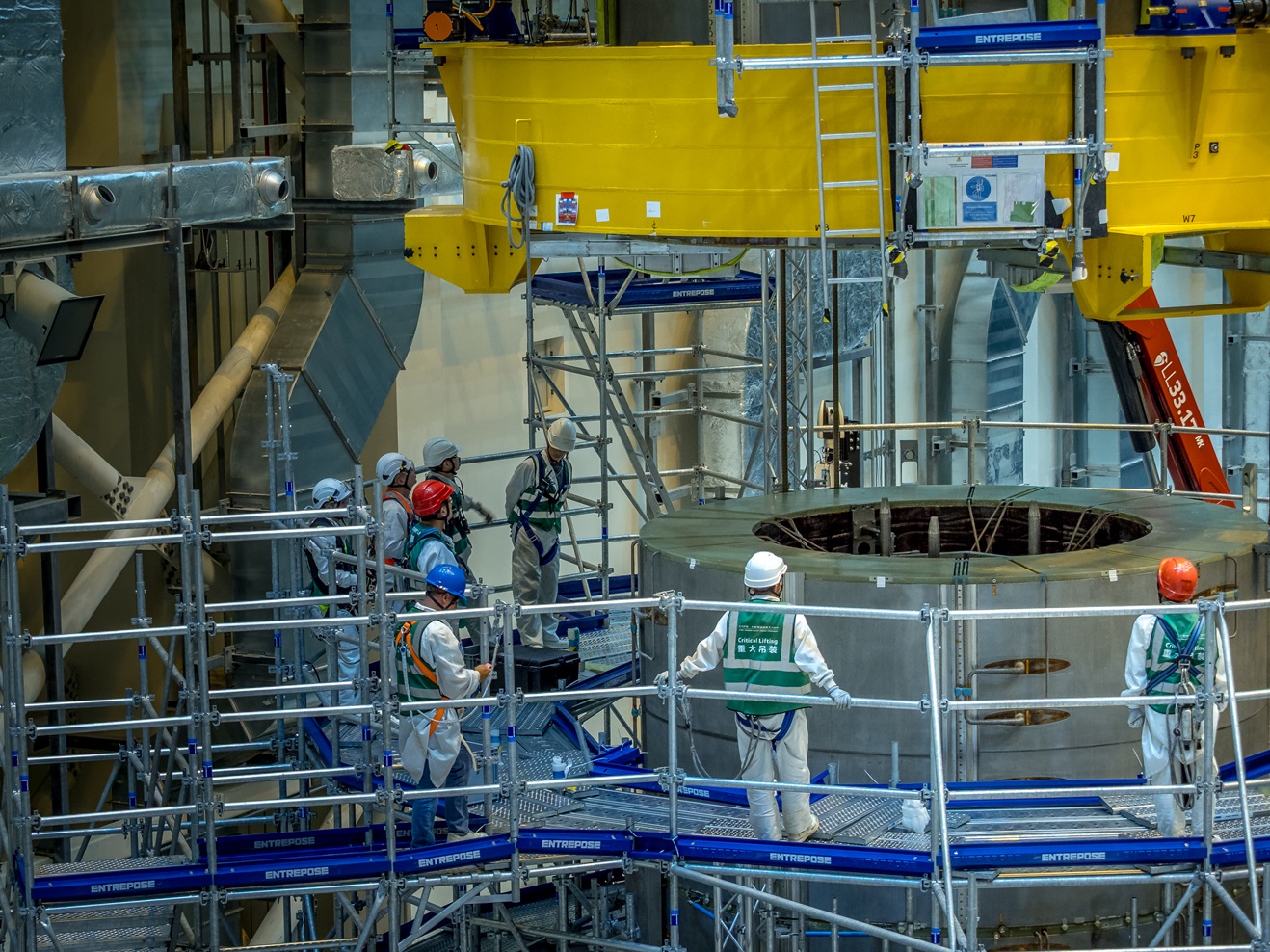
The vacuum vessel is assembled from nine major steel sectors. Its size demands precise manufacturing, welding and alignment. A surrounding cryostat helps provide the insulating vacuum needed for the cold magnet systems.
ITER's revised design replaces beryllium with tungsten for the plasma-facing first wall. Tungsten's very high melting point makes it an important candidate for components exposed to intense heat, although erosion, neutron damage and thermal fatigue remain difficult problems. The divertor must help manage heat and particles leaving the plasma.
Plasma: approximately 150 million °C. Superconducting magnets: approximately −269 °C. Tungsten melting point: approximately 3,422 °C. Each number describes a different physical environment; no structural material is intended to touch the hottest plasma directly.
06 / The fuel problem: where will tritium come from?
Deuterium occurs naturally in water. Tritium, however, is radioactive, scarce and has a half-life of about 12.3 years. A future commercial fusion plant cannot simply assume that large quantities of tritium will always be available from external suppliers.
One possible solution is to breed tritium inside a reactor using lithium-containing materials exposed to fusion neutrons. ITER will investigate test blanket concepts that explore different materials and cooling approaches. These experiments are vital, but they will not by themselves demonstrate a complete, commercially self-sufficient tritium fuel cycle.
The same neutron flux that could enable fuel breeding also damages structural materials. That creates a difficult engineering balance between tritium production, thermal efficiency, shielding, component lifetime and maintenance.
07 / What exactly will ITER demonstrate?
ITER's headline target is to produce 500 megawatts of fusion thermal power from 50 megawatts of external plasma heating, during pulses lasting around 400 seconds. Scientists express this plasma energy gain as Q ≥ 10.
Q = 10 compares fusion power with the external heating power delivered to the plasma. It does not mean that the entire ITER facility produces ten times the electricity it consumes. ITER will not export electricity to the grid; pumps, cryogenic equipment and other systems require substantial electrical power.
Before high-performance plasma experiments can begin, the facility must undergo a long commissioning programme. Individual components are tested mechanically, electrically and at cryogenic temperatures. The integrated machine must then demonstrate reliable magnetic control, plasma heating, diagnostics and safe operation.
08 / ITER in October 2026: progress, repairs and a new timetable
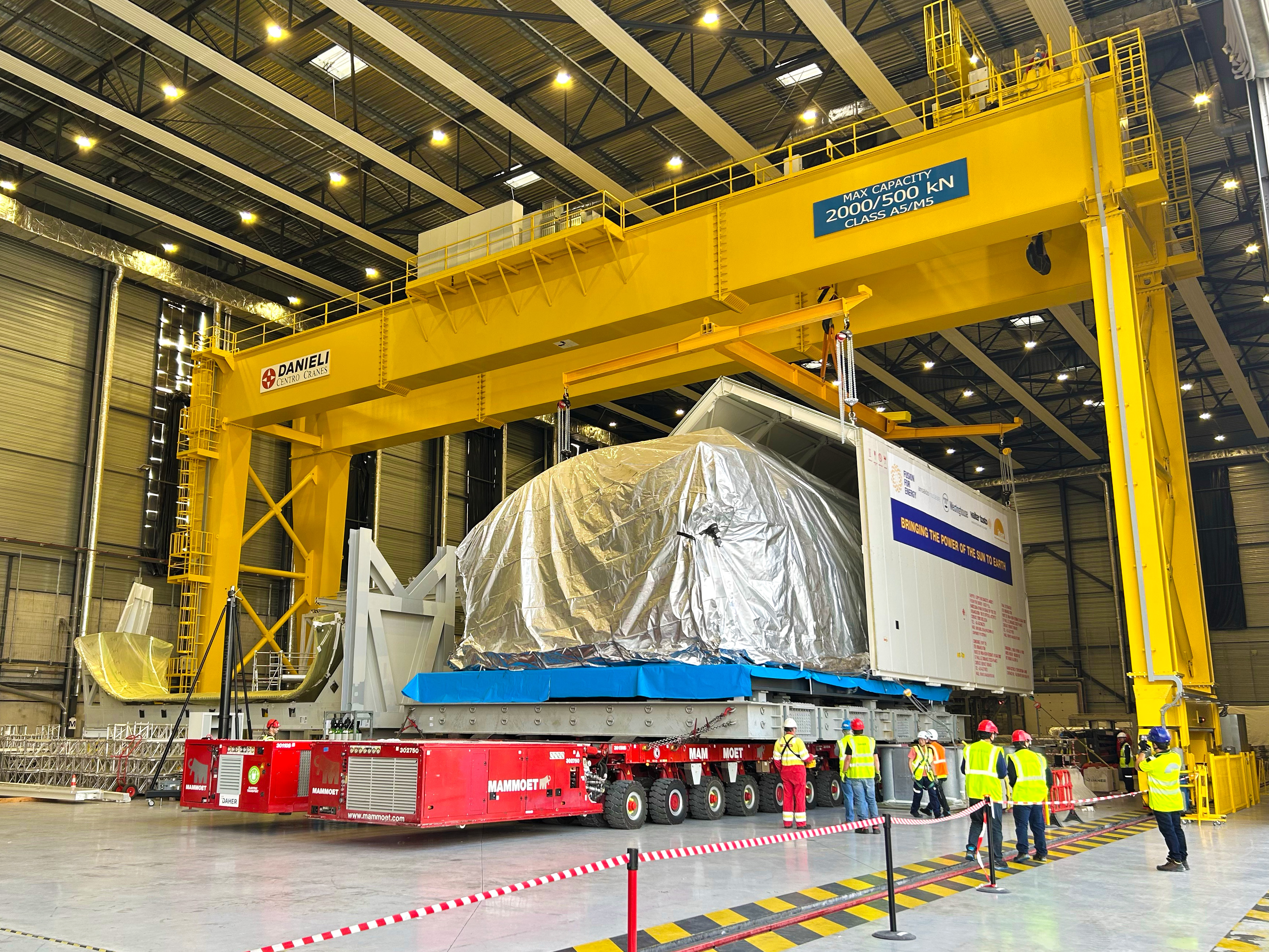
On 2 October 2026, the ninth and final vacuum-vessel sector arrived at the ITER site from Europe. On 5 October, ITER marked the completion of delivery of the principal core-machine components. This was a significant industrial milestone, but it was not the completion of the reactor: assembly, welding, internal components, testing and commissioning remain ahead.
The project has experienced delays caused by the difficulty of first-of-a-kind manufacturing, component defects and repairs, the COVID-19 pandemic and the need to rethink the initial operating strategy. The revised programme places more emphasis on completing a robust machine before beginning substantial scientific operations.
1985 — The proposal for international fusion collaboration takes shape.
2006 — The ITER Agreement is signed.
2024 — A revised programme is presented, including tungsten first-wall components and more extensive testing.
October 2026 — The final vacuum-vessel sector reaches the ITER site.
2035 (planned) — Deuterium-deuterium operation.
2036 (planned) — Full magnetic energy and plasma current.
2039 (planned) — Start of deuterium-tritium operation.
These future dates are programme targets, not guaranteed deadlines. ITER's progress should be judged both by its construction milestones and by the scientific quality and reliability of the experiments it ultimately performs.
09 / Will fusion change the future of energy?
Fusion's promise is substantial: very high energy density, no fossil-fuel combustion during electricity generation and the potential to provide controllable low-carbon power. But its commercial future remains uncertain. A power station would need to sustain the fuel cycle, convert heat to electricity, withstand neutron damage, maintain complex systems and operate at an economically competitive cost.
ITER is not intended to answer every commercial question. Later demonstration plants, commonly described as DEMO, would need to integrate electricity generation, tritium breeding and long-term operation. The transition from a scientific experiment to an industrial energy system is therefore a separate challenge.
Whatever its eventual contribution to the electricity mix, ITER is already pushing engineering boundaries in superconductors, cryogenics, advanced materials, remote handling, precision fabrication and international manufacturing coordination.
It is tempting to present fusion as the inevitable energy source of tomorrow. A more accurate conclusion is also more interesting: ITER is a test of a remarkable scientific idea, and its greatest value may lie in the evidence it produces — including the limits it reveals. The machine in southern France will not settle the future of energy on its own, but it could help us understand which paths are technically possible.
Sources and further reading
- ITER Organization — ITER Members and contribution shares.
- ITER Organization — New baseline and revised programme (3 July 2024).
- ITER Organization — Final core-component delivery (5 October 2026).
- ITER Organization — Official construction image gallery.
- ITER Organization — Press resources and image guidance.
- ITER Organization — Terms of use for website material.
- EDF — Flamanville 3 EPR reaches full nominal thermal power (14 December 2025).
- ITER Organization — Project milestones.
Photo credits: ITER Organization; ITER Organization / EJF Riche (aerial view). Each reproduced photograph has an individual source link directly below it. Fission/fusion and EPR diagrams are original noEnigma conceptual illustrations, not photographs. Photographs remain the property of their respective rights holders.


No comments:
Post a Comment
Share your thoughts and join the discussion! Please keep comments respectful and constructive.